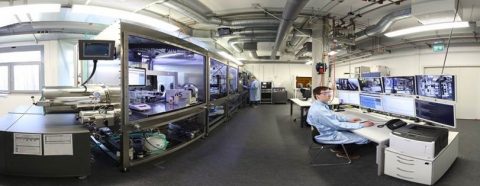
FAU is involved with two projects in the FAIRmat project, which was approved on Friday, 2 July 2021 by the Joint Science Conference (GWK) in a multi-stage competition of the National Research Data Infrastructure (NFDI). The project will receive funding to build an infrastructure that makes it possi...
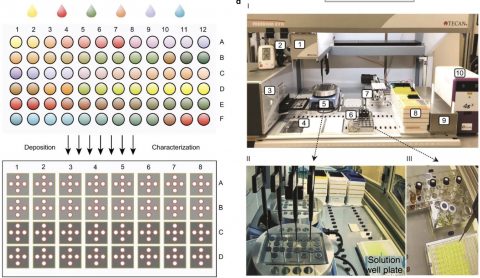
On July 1st our annual High Throughput PV Summer Seminar took place. This time the seminar was held digital. The group leaders highlighted challenges and achievements in the high-throughput research at HIERN, i-MEET and ZAE this year. The program of the workshop is listed below:
15:00
Lectur...
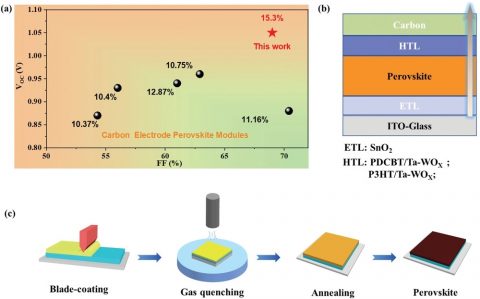
Fu and Hans from the SFF are taking perovskite processing to the next level. After having demonstrated that printed Carbon electrodes are the most interesting alternative to evaporated or sputtered top electrodes, Fu optimized the perovskite layer and was able to align the interfaces between the ab...
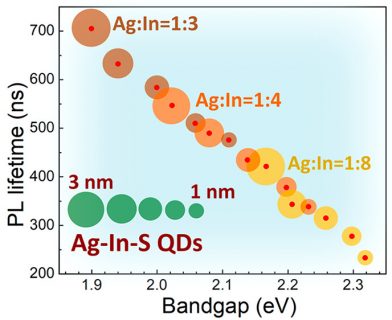
Oleksandr investigated brightly luminescent, composition- and size-selected aqueous Ag−In−S (AIS) and core/shell AIS/ZnS (ZAIS) quantum dots (QDs) by high-throughput time-resolved photoluminescence (TRPL). Both QD size and QD composition effects were probed independently by using an automated high-...
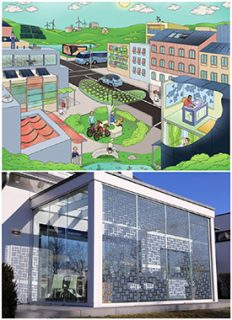
Photovoltaic technologies emerge rapidly and fascinates us more and more entering our daily life in different aspects. The perspectives of organic photovoltaics as flexible, colourful and semi-transparent modules available ubiquitously discussed by Christoph Brabec, Andreas Distler and Hans-Joachim...
Yicheng’s article “Discovery of temperature-induced stability reversal in perovskites using high-throughput robotic learning” published in Nature Communications is highlighted as the Featured article! The Editors’ Highlights pages aim to showcase the 50 best papers recently published in an area.
...
Only few years ago, the concept of autonomously driving cars has been regarded as a science fiction scenario which never will leave the halls of Hollywood. But, by today, first autonomous cars are driving on our roads, thanks to rapid development of the camera and sensor technology as well as to en...
The head of the “Solar Factory of the Future”, Hans-Joachim Egelhaaf, explains how printed photovoltaics is produced, why it offers unique advantages for building integration and how it will turn urban areas into hot spots of renewable energy production.
Source: Stefan König / vbw
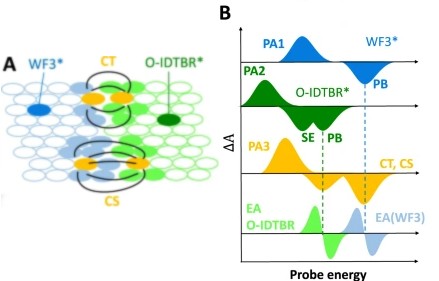
Nicola (and many colleauges) combine device and spectroscopic data to model the thermodynamics of charge separation and extraction, revealing that the relatively high performance of the devices arises from an optimal adjustment of the CT state energy, which determines how the available overall driv...
Transparent photovoltaics (TPV) possesses a huge untapped potential in the harvesting of solar energy where it readily can be embedded in buildings applications worldwide. TPV will increase the utilization of renewable energy directly where it is needed, and play a crucial role for the sustainable ...